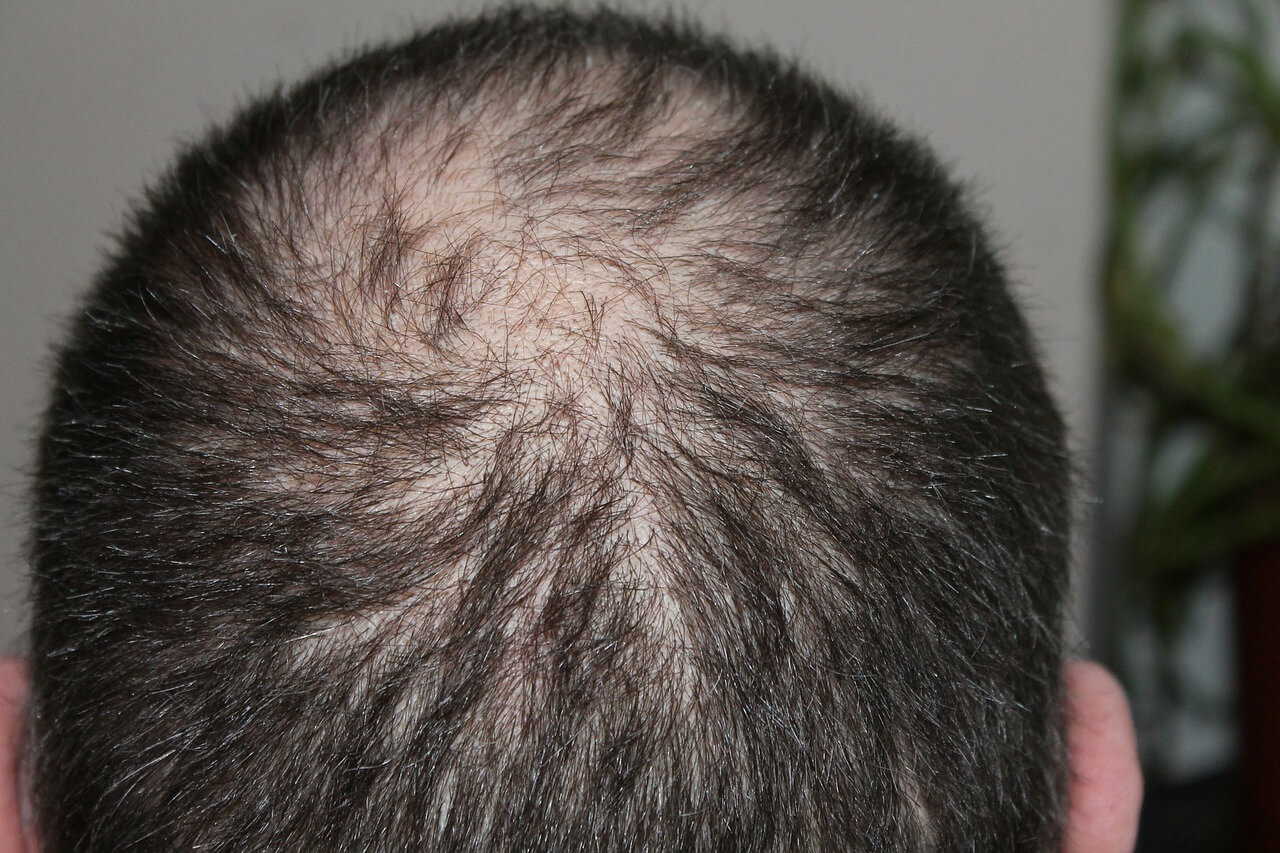
Hair is primarily a mechanism for protecting the skin from the negative effects of solar radiation, temperature changes, bruises from falling and many other dangers. But modern man rarely recalls this. For us, hair is an aesthetic component, an element that can give us charm, emphasize individuality. With heavy hair fall, a person becomes psychologically vulnerable, unsure, feels discomfort.
Is it possible to stop this pathological process and how can it be caused?
Heavy Hair Fall:
When is it time for a man to think about countermeasures? “Having lost one hair, you still do not become bald; having lost a second hair – too; when does bald spot begin? ”asked the ancient Greek idealist philosopher Ebulides of Miletus, who lived in the 4th century BC. This statement contains the most important issue that has been of concern to men at all times: how to recognize signs of impending baldness and take preventive measures to preserve hair.
From a human head, about 70 (in red-haired) to 120 hair (in blond) fall per day. This is about 4 lost hair for every five thousand “held”. After washing, dyeing hair or massaging the scalp, there is a more intense loss of hair rods than on days when such procedures are not done. In this case, the average daily amount of hair loss (calculated per week) should fit into the allotted framework. Normally, new hairs grow in place of the lost, and such biological cycles of growth and loss are repeated throughout life up to 25, or even 30 times.
The problem of baldness occurs when lost hair is replaced by substantially less new hair. Daily hair constantly falling out in excess of the natural norm can be triggered by a number of reasons for extreme hair loss, such as genetics, severe or prolonged stress, weakened immunity due to various diseases, or an unbalanced diet. A key feature of a hairy “demographic decline” in men is the large number of hairs that have fallen with the base-bulb. If the bulb is not found during examination, then the hair has broken off and the part of the hair shaft that has remained on the head will continue to grow.
Traces of the mass hair “flight” can be found in the bath when washing, as well as on a comb, pillow and collar of clothing. According to statistics, up to 90% of the male population face problems with baldness, or alopecia. Moreover, baldness, previously considered a problem for men older than 50 years, is now noticeably younger. Signs of impending loss of hair are now increasingly observed among young people aged 25–35. Causes of Hair Loss in Men In many cases, it is possible to maintain the density of the hair and stop the process of hair loss, determining the cause of baldness in men and choosing the appropriate treatment.
Hormonal disorders and genetics: androgenetic alopecia In the first place among the causes of baldness are hormonal disorders and a genetic predisposition. They provoke androgenetic alopecia, male pattern baldness, which occurs in more than 75% of hair loss cases. The pathology is based on malfunctions of the endocrine system, namely, an excessive level of dihydrotestosterone (DTG) in the blood. This is a powerful hormonal steroid, formed due to the breakdown of the male hormone testosterone.
The concentration of DHT on the skin and in the hair follicles causes a prolonged spasm of the vessels that feed the hair and inhibits their activity. Thus, the hair shaft stops growing and dies prematurely. Follicles in the parietal region have the highest sensitivity, they are the first to capitulate to the male hormone. Bulbs in the nape of the neck are the least sensitive and retain functionality longer than others. In general, how susceptible are hair follicles is determined by genetics. By inheritance, the gene for baldness is transmitted in women in 75% of cases, in men – in 20%. With androgenetic alopecia, hair falls out in shreds, starting from the crown of the head and on the forehead. The process is often accompanied by itching and seborrhea – an inflammatory disease with increased sebum secretion.
The essence of this problem was gracefully noticed by an American satirist and illusionist Robert Orben: “It may be true that bald head is a sign of male potency, but it reduces your ability to prove it.” To diagnose male pattern baldness, the Hamilton-Norwood scale developed in the middle of the last century is used. It is a phased pattern-prediction of the process of baldness to determine an individual treatment plan.
According to the Hamilton-Norwood scale, 7 stages of alopecia are distinguished. The first stage is the formation of minor bald patches along the front hairline in the forehead and temples. The next one is visible bald patches on the temples, but no more than 1.5–2 cm from the imaginary line connecting the auricles. The growth of bald patches more than 2 cm from the indicated line indicates the transition to the third stage of baldness.
When connecting the bare sections on the crown and in the frontal region with an increase in the baldness zone on the sides, we can state the presence of a fourth level of hair loss. In the fifth stage, bald spots on the occipital and temporal areas take the form of a wide “horseshoe”. Further, the focus of baldness extends to the sides, capturing the lateral parts of the head, the frontotemporal and vertex areas merge, forming one common and larger bald spot. In the seventh stage, a narrow hair semicircle remains in the occipital region and down from the auricles.
This is followed by complete baldness on the head and pronounced thinning of the hair in the inguinal region, on the patient’s trunk, arms and legs. One of the solutions to the problem of androgenic alopecia in the early stages is the normalization of the production of DTG in the blood with the help of medication under the guidance of an endocrinologist. The appropriate drugs of the pharmacological group “antiandrogens” (or inhibitors of the 5-alpha-reductase enzyme) are prescribed according to the results of analyzes, self-medication is unacceptable.
This type of therapy is time-consuming: it takes years and even decades. Adrogenic alopecia can also recede under the influence of a laser. Low-intensity laser radiation stimulates cell metabolism in the hair follicles, enhances microcirculation in the tissues of the scalp. Surgical treatment of the androgenetic type of alopecia is also effective, consisting in the transplantation of the patient’s own healthy hair from other hairy areas.
In addition to hair transplantation, therapy is used to strengthen and regenerate the strands preserved in the problem area. External factors: diffuse alopecia Diffuse alopecia takes the second place and causes 15–20% of sharp hair loss in men and up to 40% in women. The main causes of alopecia of this type: inflammatory skin diseases, malfunctioning of the thyroid gland, severe stress, infectious diseases, lack of proteins, vitamins and minerals, chemotherapy, anesthesia, prolonged use of antibiotics and other drugs that cause severe side effects.
Various factors have a negative effect in their own way. Half a dozen varieties of diffuse alopecia are secreted, depending on the mechanism of action on the hair follicles. So, alopecia with infections occurs after influenza, malaria, pneumonia, brucellosis, typhoid fever, tuberculosis, syphilis, and HIV infection. And also with prolonged and recurrent fever, each attack of which causes damage to the hair follicles in the same phase of their activity cycle.
Drug-induced alopecia can provoke the use of retinoids, antiparkinsonian and anticonvulsants, β-blockers, anticoagulants, blockers of H 2 receptors. Lack of iron, zinc, chromium, selenium, protein nutrition, vitamin B12 leads to alopecia in deficient conditions . Hair acquires signs of dystrophy – it becomes thinner and slows in growth. This type of alopecia can be a consequence of malabsorption syndrome, enteropathy, malabsorption and cleavage in various diseases of the gastrointestinal tract.
By the way, Shevelura is our wealth in the literal and figurative sense: each hair consists of 14 different elements, including gold. Diffuse alopecia in chronic diseases is manifested against the background of endocrine disorders, atopic dermatitis, erythroderma, etc. Psychosomatic alopecia is the result of stress, experienced operations, accidents and other life threats. In cases where the above causes of hair loss are not identified, the diagnosis of idiopathic chronic alopecia is possible .
With diffuse alopecia of any kind, thinning is noted evenly on the entire surface of the head, but the volumes of hair lost are dangerously high. In severe forms, up to 1,500–3,000 hairs fall out daily, which is 20 times higher than normal. Before treatment, a diagnostic program is prescribed to detect diseases of the thyroid gland, central nervous system, ovaries and adrenal glands, liver, immune system, etc. Depending on the identified abnormalities, treatment of the primary disease, which became a factor in baldness, is prescribed.
Often, the main treatment is combined with external therapy, which consists in applying lotions, balms, ointments to the skin of the scalp, and electrophoresis of biologically active substances is prescribed. For oral administration, vitamins C, PP, A are prescribed, in the form of injections – vitamins of group B. A long-term intake of zinc, multivitamin complexes, biologically active additives to activate hair growth is recommended.
Transplantology in this case is able to create a cosmetic effect rather. Autoimmune disorders: focal hair loss Nesting, or focal, which accounts for up to 3.5% of cases of baldness, is characterized by separate areas of distribution.
The cause can be infections, traumatic brain injuries, autoimmune diseases such as lupus erythematosus, scleroderma and other disorders of the immune system. With focal hair loss, baldness areas are not only located on the head, but also on the body: in the groin, under the armpits, on the beard, chest and limbs. In the absence of treatment, the foci grow, merge with each other, forming vast areas.
Loss of eyelashes, brow browing is possible. With this pathology, more hair remains in the bulb in the “sleeping phase”. If the underlying disease is not treated, the follicles will stop hair renewal and die. Drug treatment is prescribed depending on the identified concomitant diseases. So, when foci of infection are detected in the body, anti-inflammatory drugs are prescribed.
Perhaps the appointment of improving microcirculation and nutrition of tissues, sedatives, vasodilators, nootropic drugs. Various creams and tinctures containing heparin and verapamil are applied externally. In severe forms, drugs with a high content of glucocorticoid hormonal drugs are prescribed – for grinding in a problem area or for administration by mesotherapy. Physiotherapy is actively used: ion and phonophoresis, microcurrent stimulation, darsonvalization, laser therapy, ozone therapy, exposure to ultraviolet rays (UVA). The effect of treatment at each site occurs no earlier than after 3 months.
In severe cases of focal alopecia, the effect can occur only as a result of prolonged complex treatment. Diseases and injuries: cicatricial alopecia This type of baldness is also diagnosed in 2-3% of cases. Baldness develops from mechanical damage to hair follicles and can even affect children.
This is the most difficult type of baldness, amenable to correction, but not a complete cure. In the injured area, the hair falls out in bunches, and the germination of new ones becomes impossible due to the formed scar tissue. The reasons include chemical and thermal head burns, oncology, operations and injuries that left scars and scars on the head, as well as congenital diseases: ichthyosis, skin aplasia, pigment incontinence. Initially, baldness is observed in small areas of the skin, increasing in size.
In some cases, the symptoms of the illnesses that cause hair loss may not appear for a long time. In others, on the contrary, the symptoms are very pronounced and are accompanied by burning and itching. Affected skin with cicatricial hair loss is usually smooth, but against the background of inflammatory processes, redness, peeling, purulent blisters are possible.
For the diagnosis and treatment of cicatricial alopecia, a biopsy of the scalp is performed. This examination allows you to determine the form of baldness, the stage of destruction of the hair follicles, as well as the stage of scar formation.
Drug therapy does not bring positive results. Surgical intervention also does not guarantee a lasting result, because atrophied scar tissue has poor blood supply, which makes it difficult for the grafted graft to regenerate and regenerate. It is important to consult a specialist at the first sign of hair loss. Lost time can result in a permanent loss of hair.
To deal with the problem, the trichologist will prescribe a number of tests and examinations, in particular, an immunogram, a general analysis of blood and urine, determination of the hormonal background, biopsy, and computer diagnostics of the hair structure. Treatment with a trichologist can be supplemented by the recommendations of a therapist, endocrinologist, dermatologist, surgeon or neurologist.


 Health Arcade